Time to respond
With one adult for every two children, care can follow a baby’s cues instead of a crowded room’s pace.
A home and garden prepared for four children at a time, cared for every day by the same two people: Jess and Gillian.
Free to join. No commitment to enroll.


I looked for a program like this and couldn’t find one. So I’m building it with a few families.
I’m bringing the care I’ve offered families as a nanny into a home I’ve prepared for a small group of babies. Our days will follow each child’s rhythms, interests, and development.
If you’re curious about what we could build together, I’d love to hear from you.
With love,

The intimacy of private care. The intentionality of a prepared environment.
Small enough that every baby is known and noticed.
With one adult for every two children, care can follow a baby’s cues instead of a crowded room’s pace.
The same two adults learn your baby’s rhythms, preferences, and ways of communicating over time.
The whole house is set up for young children: open floor space, a quiet sleep room, a working toddler kitchen, a potty-learning area, and a toddler handwashing station. Outside, a shaded terrace and a garden we’re growing slowly.
“I was a first-time mom and Jess was a balm for my uncertainty and worry during those early years. She was always warm, communicative, and flexible.”
Yen, San Francisco Former nanny family
Space to move, time to figure things out themselves, long stretches of child-led play, and time outdoors when the weather allows. There is a dependable rhythm, without overscheduling or pressure to perform.
Cues are noticed, and routines stay predictable, so babies know what comes next.
When big feelings come, adults stay close, calm, and clear. Support without shame or harshness.
Feeding, diapering, transitions, and shared meals are treated as meaningful moments of connection, not tasks to get through.
Babies spend real time on the floor: reaching, rolling, crawling, pulling up, and practicing what their bodies are ready for. No walkers or bouncers.
A baby watches, reaches, pours, stacks, listens, and returns to an idea. Adults observe carefully without turning every discovery into a lesson.
Carefully curated toys, real instruments, everyday objects, and a children’s garden we feed with our own compost.
Toddlers practice everyday life in a child-size kitchen: pouring, washing, wiping up, and helping with food prep. There’s a potty-learning area and a handwashing station, there when a child shows readiness.
A separate, quiet sleep room lets babies nap while the others go about their day.
In infancy and early toddlerhood, care is not separate from development. The way a child is held, spoken to, fed, comforted, watched, and given room to move helps shape safety, trust, regulation, and confidence. Here, care is designed around that responsibility.
The small scale, steady relationships, respectful routines, free movement, and prepared environment are intentional choices, grounded in child development research and pediatric guidance.
Science & sources Read the science behind the approach
Jess has been a nanny for 18 years, caring for babies alongside families in San Francisco and Los Angeles. Most of what she knows comes from those years on the floor with babies: slowing down, watching closely, and letting them show her what they’re working on.
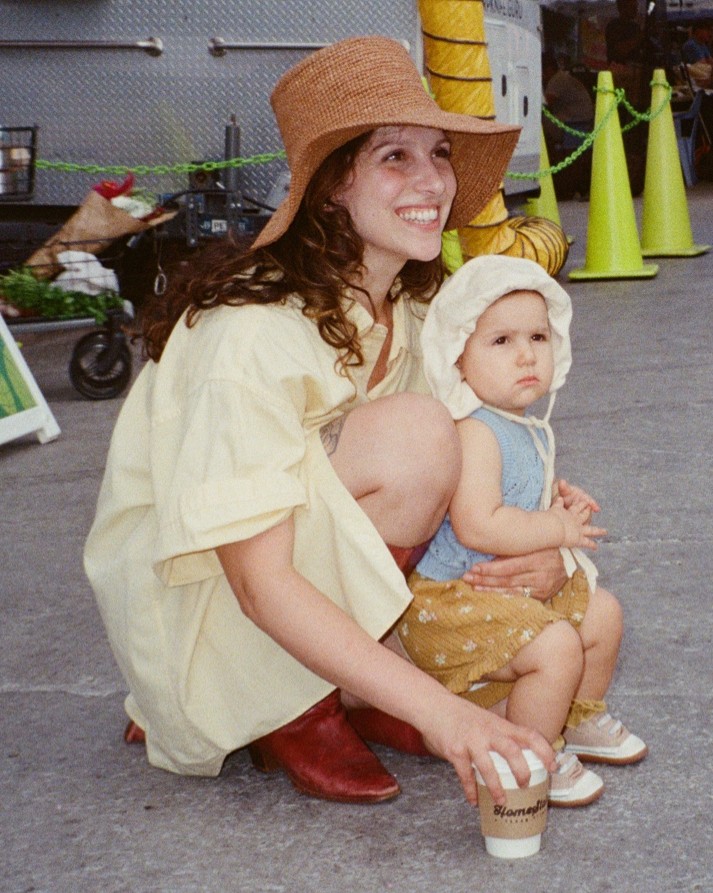
Three founding-family places are planned for January 2027 near the Silver Lake Reservoir. The fourth is for Jess’s daughter, Zosia. No care, enrollment agreement, or payment begins until the family child care license is issued.
Tell us about your family →Joining the waitlist is free, and it isn’t a commitment to enroll.