
Motherhood
I Don’t Remember My Mother Playing With Me
Wondering about independent play, neighborhood childhoods, and whether being present always means joining in.
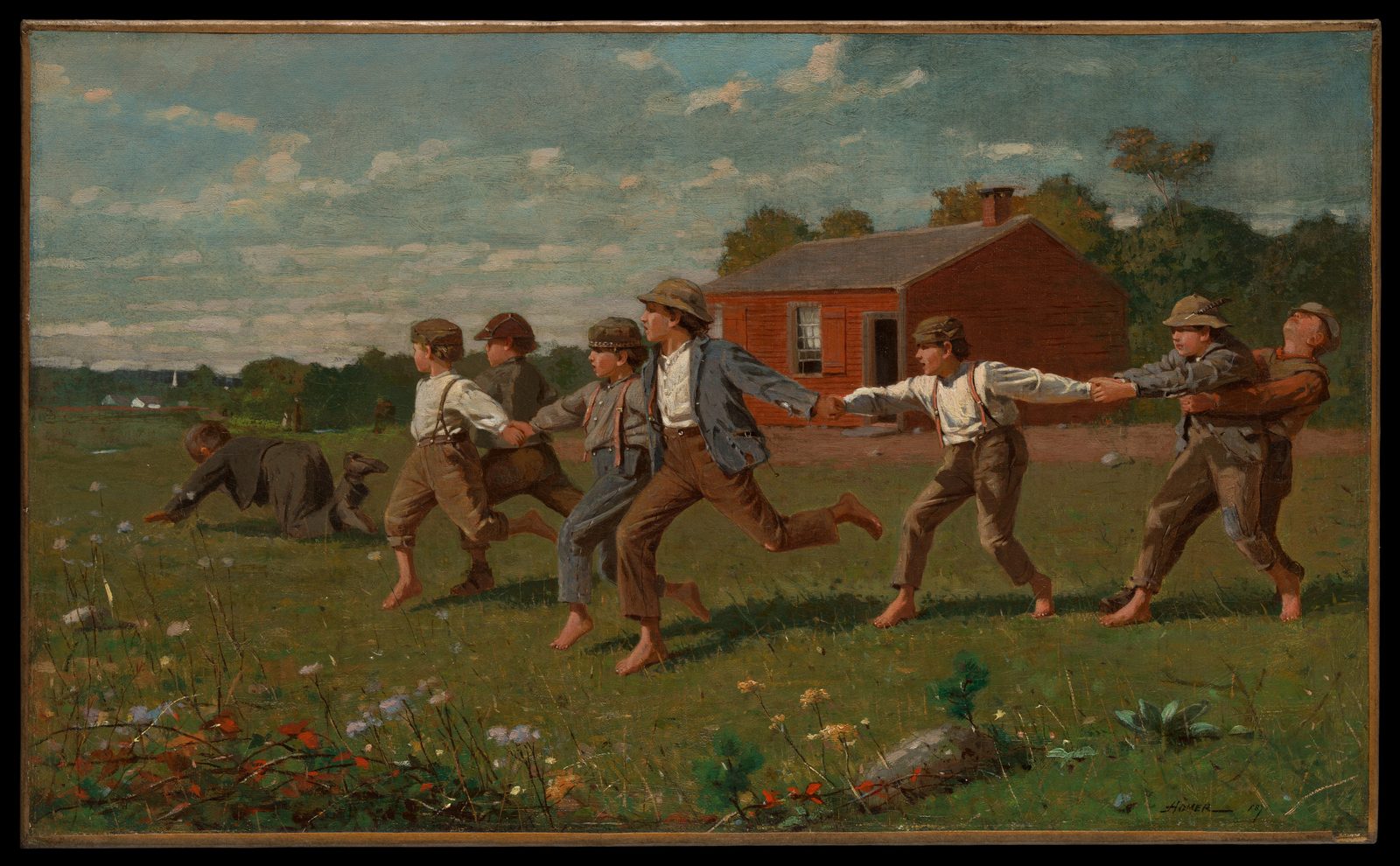
I recently read Elena Bridgers’s essay, “Mothers Did Not Play With Their Children for 99% of Human History” , in her Substack, Motherhood Until Yesterday.
The title is provocative, and I wouldn’t repeat all of its evolutionary claims with the same certainty. I’m not a researcher. I’m a mother and longtime nanny, and it made me wonder why I have always felt relieved by approaches that let children play without an adult directing every minute.
I don’t remember my mother playing with me very often.
She let me go outside with the neighborhood children while she did housework or talked on the phone. I don’t remember feeling ignored. I remember having a world of my own.
But my mother was playful. I remember her chasing me up the stairs, calling, “I’m going to get you,” while I shrieked with laughter. She was also a great audience. If I had something to show her, she paid attention. She didn’t have to climb inside every game for me to feel that she enjoyed me.
She didn’t play all day. She did delight in me.
I feel a pressure now to be visibly engaged with Zosia all the time. Not just caring for her, but teaching, narrating, arranging, and joining in. If I sit nearby and let her work something out, part of me still wonders if I should be doing more.
Bridgers writes about mixed-age playgroups in hunter-gatherer societies, where children often played with children of different ages and adults were less involved in organizing their time. Research does suggest that, in some forager communities, these groups blend play, learning, and care for younger children. They can also lighten the amount of direct childcare mothers provide.
That doesn’t mean there was one perfect ancestral childhood that we should try to recreate. Contemporary hunter-gatherer societies are diverse, and they aren’t windows into a single, uncomplicated past. Still, it gave me another way to think about what children might need, and about why modern motherhood can feel so strangely lonely.
Maybe they don’t always need us to play with them.
Maybe they need other children, interesting materials, unhurried time, and adults who are close and responsive without continually taking over. Feeling loved might not require being constantly entertained.
At 13 months, Zosia still needs enormous closeness and attention. Independence at this age isn’t separation. It might be a few absorbed minutes with a basket, moving between the garden and my lap, or watching another child before deciding whether to approach.
This is part of what I want to try at Infant Atelier. Prepare the room carefully, put a few good things within reach, and then leave enough space for the children to have ideas I didn’t give them. I don’t want them to perform engagement for adults. I want their attention to belong to them.
I’m still figuring out the balance. Sometimes Zosia wants to be right on top of me. Sometimes she becomes completely absorbed in a cup, a leaf, or something she found on the floor that I wish she hadn’t.
I try not to interrupt too quickly. I try to let her have the moment.
And when she looks back at me, I’m there. Maybe that’s enough more often than I realize.