
Infant social development
Where Social Skills Begin
Sometimes the child watching from the edge is doing some of the most important social work in the room.
A couple of weeks ago, I took Zosia to Mark in the Park, the pay-what-you-can music class at the Silver Lake Recreation Center.
Zosia is 13 months old and usually very social. She waves at strangers. She goes up to adults and other children. She wants to know what everyone is doing.
That morning she mostly wanted to watch.
The other children had instruments. The teacher was singing. Everyone seemed to be doing the thing we had come there to do, and I felt this little pressure rise in me. I kept handing Zosia instruments. A shaker, then something else. I was trying to encourage her, but if I’m honest, I think I also wanted her to look like she was participating.
At some point I noticed myself doing it and stopped. She hadn’t asked for my help. She wasn’t upset. She was sitting close to me, listening, looking at the teacher, looking at the children, and checking back in with me.
She was there. I was the one having trouble letting that be enough.
The meme that got me thinking
Around the same time, I saw a meme circulating on Facebook. It said, basically, that babies don’t learn their first social skills on the playground. They learn them in the relationship with the person caring for them.
I understood why people were sharing it. There is something reassuring in the idea that holding a baby, answering them, noticing them, and being the person they come back to is not somehow less valuable than a class or a group activity. It is the work.
The meme also went too far. It claimed that peer interaction has little impact until age three or four, and that doesn’t match the research, or the babies I’ve watched. Babies notice other babies. Toddlers copy each other, trade objects, hover nearby, make each other laugh, get annoyed, move away, and come back. They are doing social work with peers before they can play together in the way adults usually mean.
So I don’t think the choice is attachment or peers. I think the meme was trying to protect one important truth and flattened another one to do it.
Before children learn how to be with a group, they have many small experiences of what it feels like to be with someone.
Watching counts
I’ve cared for babies and young children for a long time, and so much of their social life is easy to miss if you’re waiting for a recognizable performance of friendship.
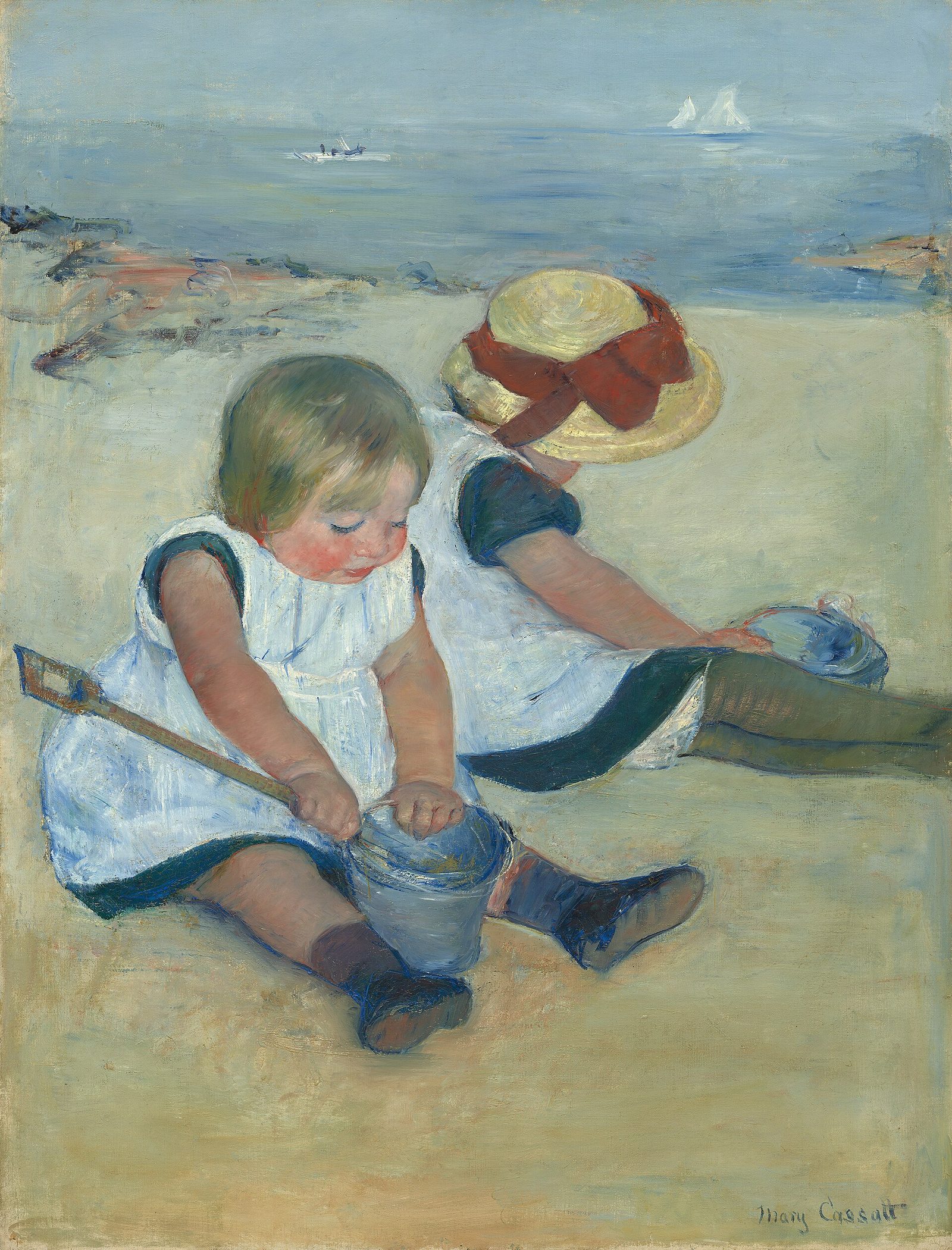
A toddler fills a bucket beside another toddler. One baby stares at another baby eating. A child copies the exact sound another child made, then walks away. Two children roll a ball back and forth three times and are done.
An adult might say they didn’t really play together. I’m not sure the children would agree.
Cooperative play grows slowly. One study following children between 19 and 27 months found that they gradually became better able to notice what another child was doing and coordinate with them (Brownell, Ramani, and Zerwas, 2006). That feels true to what I’ve seen. It doesn’t suddenly switch on.
At the same time, the relationship with a familiar adult matters enormously. Developmental researchers sometimes call the back-and-forth between a baby and caregiver “serve and return.” A baby looks, reaches, babbles, or cries, and someone answers. Not perfectly. Just often enough that the baby begins to know their signals can reach another person.
This happens while you’re warming a bottle, changing a diaper, or reading the same board book again. It also happens after you miss the cue, get impatient, and come back. I don’t believe babies need perfect attunement. I certainly can’t offer it. They need a relationship with room for repair.
Research connects sensitive caregiving with secure attachment (Madigan et al., 2024), and secure attachment is associated with stronger peer relationships later (Groh et al., 2014). I’m careful with the word associated. This isn’t a formula, and no child is defined by one hard day.
What I take from it is simpler: needing closeness is not the opposite of becoming independent. A child can use us as a place to come back to while the rest of the world becomes more interesting.
A child does not have to perform connection
I keep coming back to that morning at Mark in the Park because Zosia is not generally a hesitant child. If anything, I’m often following her as she heads toward someone new. But on that day, in that room, she wanted to stay close and watch.
Maybe she was tired. Maybe the room felt loud. Maybe she was taking it all in. I don’t actually know, and that is part of the point.
I don’t want to turn every pause into a problem to solve. I don’t want her to learn that interest only counts when it is visible to adults, or that connection has to look like waving, clapping, taking the instrument, joining the circle.
This is part of why I’m drawn to very small-group care. Not because other children are unimportant, but because I want there to be enough room for a child to notice them without being lost in the group. To move closer, move away, sit with an adult, try again.
I want to remember this as Zosia’s mother too. My years of working with children can easily become a list in my head of what I think should happen next. Sometimes experience helps me see her more clearly. Sometimes it makes me get ahead of her.
That morning, I put the instruments down. She stayed beside me for a while. Nothing dramatic happened.
She watched the class, and I tried to watch her.
Sources
- Center on the Developing Child at Harvard University. “Serve and Return.”
- Center on the Developing Child at Harvard University. “InBrief: The Science of Early Childhood Development.”
- Center on the Developing Child at Harvard University. “Brain Architecture.”
- Madigan, S., et al. (2024). “Maternal and paternal sensitivity: Key determinants of child attachment security examined through meta-analysis.” Psychological Bulletin, 150(7), 839–872.
- Groh, A. M., et al. (2014). “The significance of attachment security for children’s social competence with peers: A meta-analytic study.” Attachment & Human Development, 16(2), 103–136.
- Brownell, C. A., Ramani, G. B., and Zerwas, S. (2006). “Becoming a social partner with peers: Cooperation and social understanding in one- and two-year-olds.” Child Development, 77(4), 803–821.
- NICHD Early Child Care Research Network. (2008). “Social competence with peers in third grade: Associations with earlier peer experiences in child care.” Social Development, 17(3), 419–453.
- Office of Head Start, U.S. Administration for Children and Families. “Fostering Infant Relationships with Peers and Siblings.”